【Special Feature】
Delving into the Secret behind the Deleted Ancient Document Hotsuma Tsutae
Records of the “Creator God” Missing in Japanese Mythology
By HSU Vice Principal and Dean of Faculty of Human Happiness, Hakuun Kurokawa

(From HSU Campus Newspaper Angel's Ladder Issue 114)
Now, the light has begun to shine on Japanese history. Hotsuma Tsutae, an ancient document that predates Kojiki and Nihon Shoki, is the light and the key that will reveal the dark side of Japanese history.
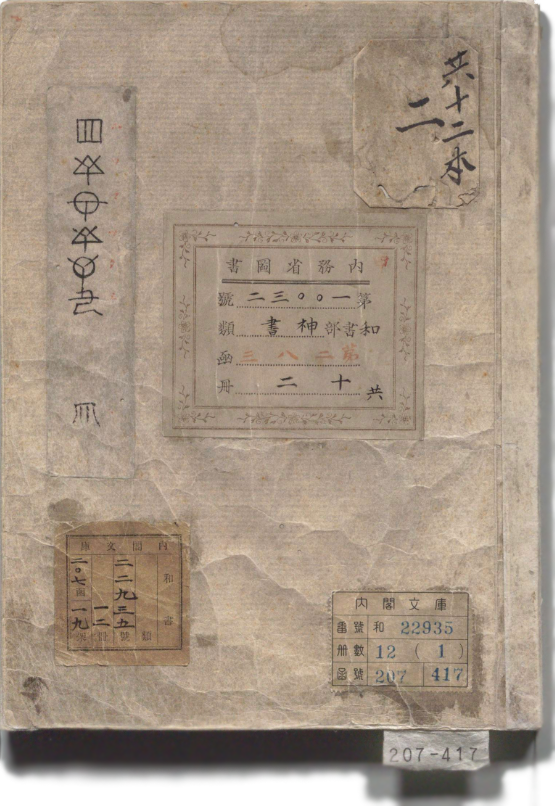
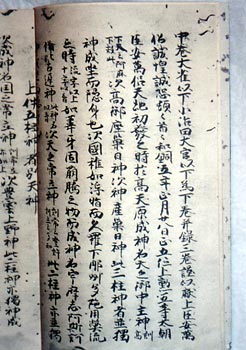
Hotsuma Tsutae, along with Mikasafumi and Futomani, is one of the ancient epics known as Woshite literature that was written using Woshite (Hotsuma) characters. It is considered the original chronicle of Japan—a 5-7 syllable, long-poem styled record of Japanese events and philosophies from the Jomon period to the early Kofun period (ca. 13,000 BC to mid-3rd century AD) written in the ancient language before Chinese characters were introduced.
Extensive research on Woshite literature has revealed that these documents may be the source of Kojiki (Records of Ancient Matters) and Nihon Shoki (Chronicles of Japan), which were both put together in 8th-century Japan.
Foreign Scholars Have Mentioned
the “Hollow Structure” of Japanese Mythology
Mircea Eliade, a mythologist, and William G. Aston, a Japanese scholar, both analyzed Japanese mythology and pointed out a shocking fact—that it does not mention the Creator God of the heavens and the earth.
It is true that Kojiki and Nihon Shoki both tell the genesis of Oyashima-kuni (the Japanese archipelago), but they have no records of how the universe began or any mentions of the Creator at all.
Hayao Kawai, professor emeritus at Kyoto University, called this the “hollow center structure” of Japanese mythology and argued that it had an impact on Japanese mentality.
Why was Japanese mythology the only cultural tradition in the world without a Creator?
Amemioya—
His Breath Gave Birth to the Universe
![『ホツマツタヱ』に綴られた天地創造の様子(和仁估安聡 釈述 [漢訳付] 『秀真政傳紀』より)](../img/hotumatutae_amemioya.png)
Below is an excerpt from Hotsuma Tsutae:
It was before heaven, earth, or humans had yet appeared. Amemioya (Ame-no-Mioya-Gami)'s first breath began to move, rising in the east and setting in the west, continuing to circulate endlessly in a circle.*
The passage above is indeed worthy enough to be called the Genesis of Japanese mythology. Out of Ame-no-Mioya-Gami's first breath came the Sun, the Moon, the Earth, and human beings. Ame-no-Mioya-Gami, as depicted here, transcends the personified gods of polytheism; He is the Creator God, the Cosmic God, and the God of Love who created the universe itself.
Mitsuru Ikeda, a leading researcher of Woshite literature, states the following:
The heartwarming nature of Amemioya, the Absolute God of ancient Japan, is akin to the merciful nature of Allah in Islam. Yahweh of both Christianity and Judaism, which are also leading monotheism, is quite a jealous god, which makes him a god of a very different in nature from Amemioya.
From Mitsuru Ikeda's Traveling through the Heart of Jomon People: Hotsuma Tsutae Rewrites Ancient Japanese History, partially edited
Mikasafumi, another piece of Woshite literature, describes the size of Ame-no-Mioya-Gami:
Amemioya stood at eight million Tomeji*
This is approximately 25 times the size of the universe. So, Ame-no-Mioya-Gami is the Cosmic God far beyond our imagination.
Overwriting History
—The Moment Mythology Was Abused in Politics
Why was the record of the Creator deleted from history? The key to the answer lies in the historical background of how Kojiki and Nihon Shoki were compiled in 712 and 720, respectively.
The Battle of Baekgang in 663, which took place during Emperor Tenji's reign, between the Baekje-Japan allied forces and the Tang forces, ended in an overwhelming victory for the Tang. This led to the fall of Baekje and the frequent turmoil in Japan. So, as a nation, Japan needed to restore its prestige and establish its rightful position in the international community. Japan was eventually able to maintain peace and stability in the early 8th century, when Kojiki and Nihon Shoki were compiled to do away with the age of chaos, start afresh, and demonstrate that Japan was a rightful nation. Ikeda claims that the heart of Woshite literature was intentionally deleted when the two documents were compiled.
It was essential for Japan to have something that could fully appeal to foreign countries about the rightfulness of Japanese history. Therefore, it was necessary to uphold Ame-no-Minakanushi-no-Kami as the primordial god of the heavens and the earth. This idea corresponded to the Mandate of Heaven ideology that was prevalent in China at the time.
From Mitsuru Ikeda's Deciphering Hotsuma Tsutae
Thus, Japanese mythology was reorganized as the national ideology of Japan.
During the Nara period, the emperor-led ritsuryo state system was established, Chinese culture was rapidly incorporated, and Chinese characters were institutionalized as the official characters of the Japanese language. With the compilation of the Kojiki and Nihon Shoki, Woshite characters were no longer used and many pieces of Woshite literature were wiped out.
Master Ryuho Okawa of Happy Science states the following in The Descent of Ame-no-Mioya-Gami:
It is said that Kojiki and Nihon Shoki were compiled in favor of the central government at the time. (…) Many descriptions were apparently “erased” in this way, so it has generally been considered that the central government back then tried to justify its rule through the two documents.
The wiping out of Woshite literature was truly an eradication of Japanese history from its roots. Japan's admiration for the Chinese language and its urgency to establish an emperor-led nation sent Hotsuma Tsutae into the depths of oblivion.
Happy Science Has Brought Back
The Spirit of Ame-no-Mioya-Gami
In the Preface of The Descent of Ame-no-Mioya-Gami, Master Okawa writes: The God of Creation that should be described in the Japanese myths is the Messiah called “Ame-no-Mioya-Gami,” who had come from the Andromeda Galaxy.
Based on this perspective, Hotsuma Tsutae is not just an ancient historical document but a book that reveals the history of the universe and that also tells how the Earth civilization came to be.
Today, Ame-no-Mioya-Gami speaks again through Master Okawa in the form of a spiritual message. Furthermore, the Shrine of Ame-no-Mioya-Gami has been constructed. We are now at a time when we must recall that the memory of the True Creator dwelled in the center of the hollow structure of Japan.
Ame-no-Mioya-Gami is the light that was sealed by historical revision. To bring back His Name once again and convey it throughout Japan and the world means for us to return to the faith in the Creator that we, Japanese people, have forgotten over the long years. And it will be the first step toward creating a new civilization, a mission given to us living in the 21st century.
* Reference material used for modern translations of Hotsuma Tsutae and Mikasafumi: Satoo Imamura, Hajimete no Hotsuma Tsutae: Ten no Maki and Mitsuru Ikeda, Jomon-jin no Kokoro wo Tabi suru: Hotsuma Tsutae ga Kaki Naosu Nihon Kodaishi.

