

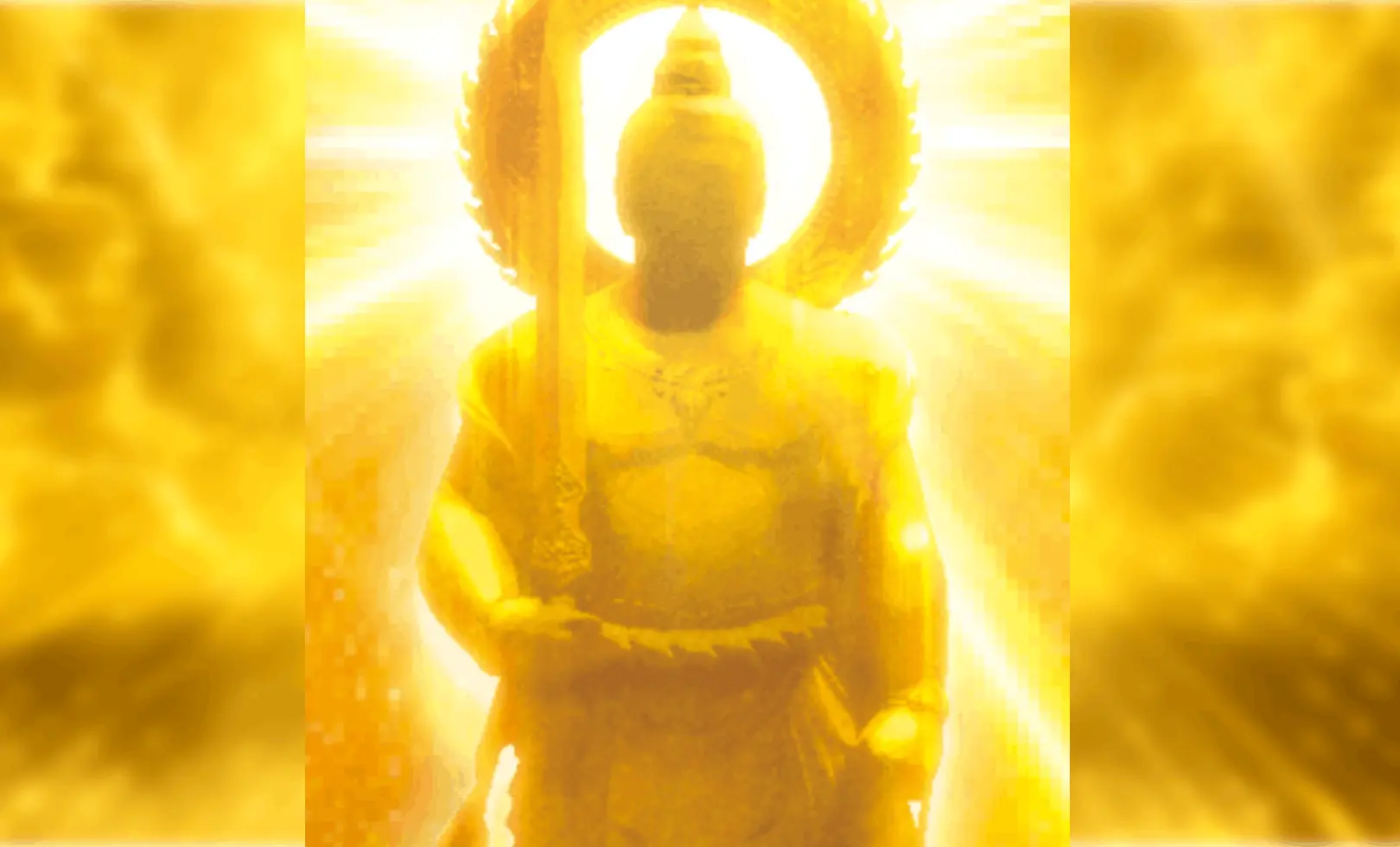


Ame-no-Mioya-Gami is the Creator and Father God of the Japanese race. As an attitude for worship, please venerate and respect the God who created us human beings. Keep in mind that there is a tremendous difference between the 'Creator God' and the 'created ones.'
The Shrine of Ame-no-Mioya-Gami
Ame-no-Mioya-Gami is the Highest God of Japan and the Creator and Father God of the Japanese race. His name appears in the ancient document Hotsuma Tsutae, which is said to have existed before Kojiki (Records of Ancient Matters) and Nihon Shoki (Chronicles of Japan).
Around 30,000 years ago, descending from the mother star of the Andromeda Galaxy with about 200,000 people by spacecraft, they landed at the foot of Mount Fuji, establishing the 'Fuji Dynasty' and laying the foundation of Japanese civilization. They were said to have a height of 25 meters, resembling that of a Yokozuna (sumo grand champion).
He taught values such as Justice, Propriety, Order, and Harmony, which later spread to and became the source of many civilizations on the Eurasian continent, including China, India, and the Middle East. His Teachings even influenced the civilizations on continents such as Mu and Atlantis. The values He taught have continued to be handed down to this day as the underlying source of Japanese Shinto and the Bushido spirit (samurai spirit).
Master Ryuho Okawa has taught that Ame-no-Mioya-Gami is a Being who is close to the core consciousness of Lord El Cantare, the Creator of the Great Universe and the God of the Earth. He and Chinese God Pan Gu, the Creator of the heavens and the earth, are one and the same. The Shrine of Ame-no-Mioya-Gami was built in December 2025 to proclaim and honor Ame-no-Mioya-Gami and His Teachings here in Gora, where He rests in peace.
The Teachings of Ame-no-Mioya-Gami
in Ancient Japan
To make this country of Yamato, Japan
A land where dreams flourish
I have come
This land full of bliss and peace
In a spring mist
I will make
Plum
Cherry
And peach flower
all across the land
I shall turn this country of Yamato
Into the Peach Blossom Land, utopia
From the song 'The Dream of Ame-no-Mioya-Gami'
The Secret of the Erased Ancient Text Hotsuma Tsutae
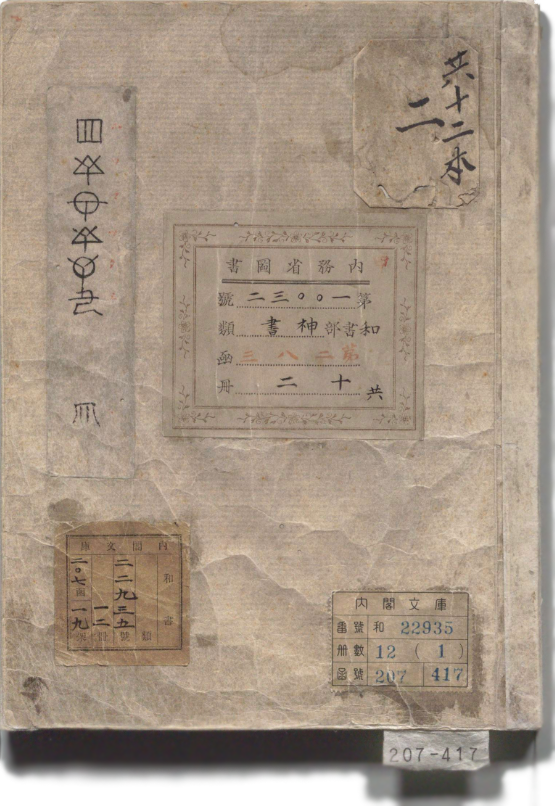
Image Source: National Archives of Japan
“It was before heaven, earth, or humans had yet appeared.
Amemioya (Ame-no-Mioya-Gami)’s first breath began to move,
rising in the east and setting in the west,
continuing to circulate endlessly in a circle.”
【Special Feature】
Delving into the Secret behind the Deleted Ancient Document Hotsuma Tsutae
Attitude for Worship (Prayer)
I am
The Supreme God
Of this country of Yamato
I will endow this country
With Justice,
Dreams,
And Graceful Beauty
From the song 'The Dream of Ame-no-Mioya-Gami'
How to Walk the Shrine Path
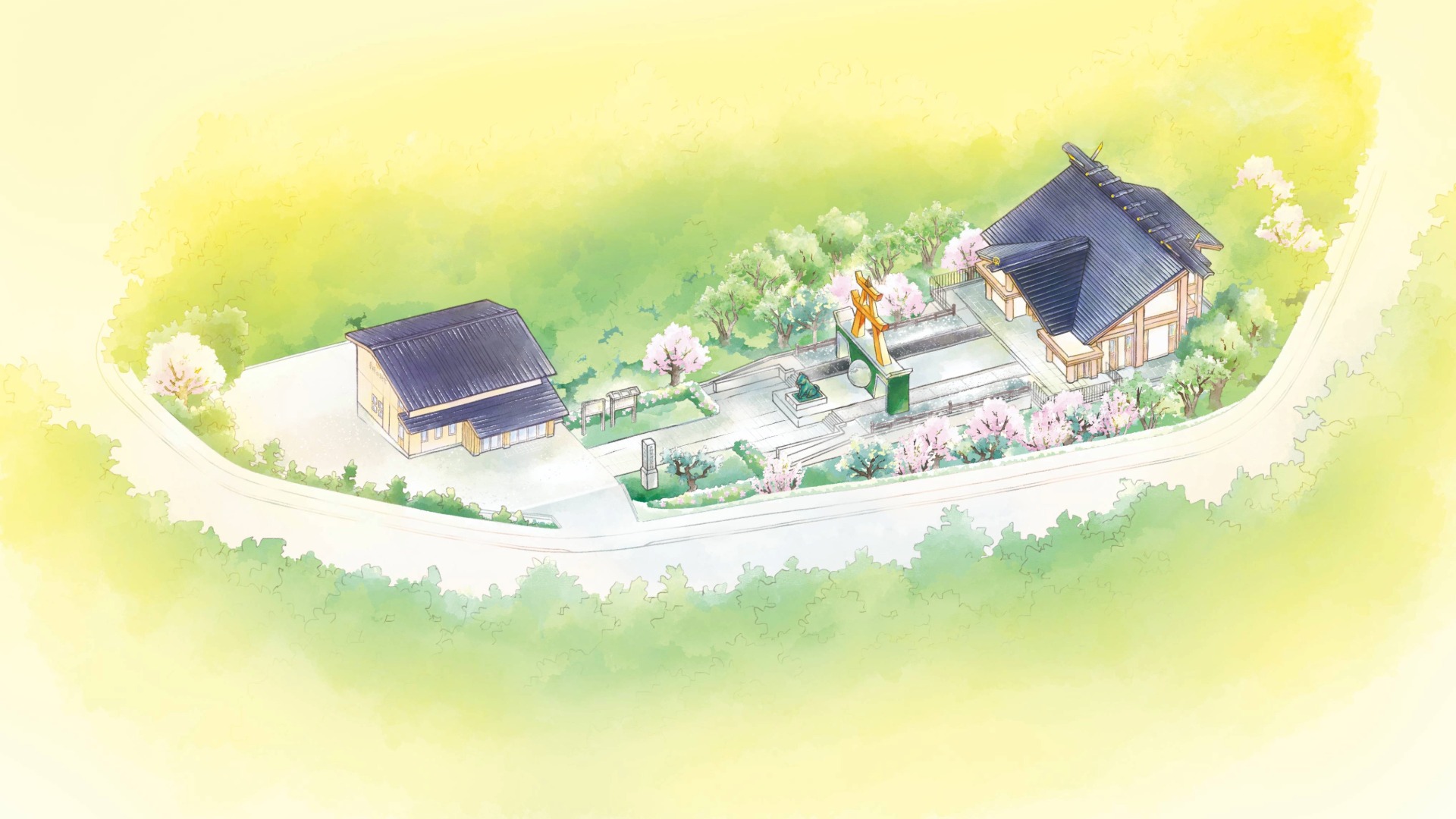
The shrine path is a place to calm your mind before approaching the El Cantare statue (Gohonzon) inside the Main Hall.
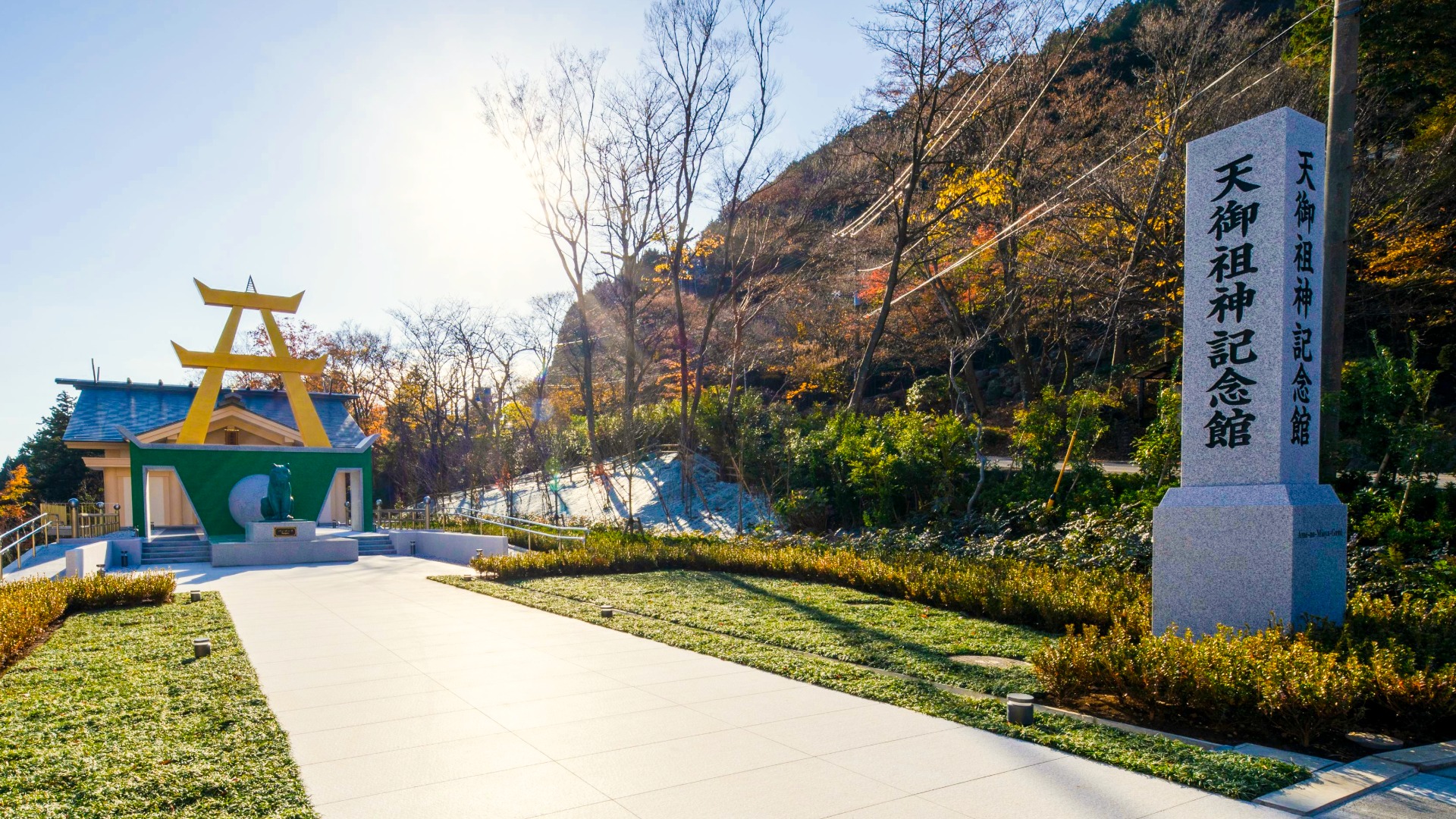
Walk with dignity and courtesy, purifying your mind as you go.
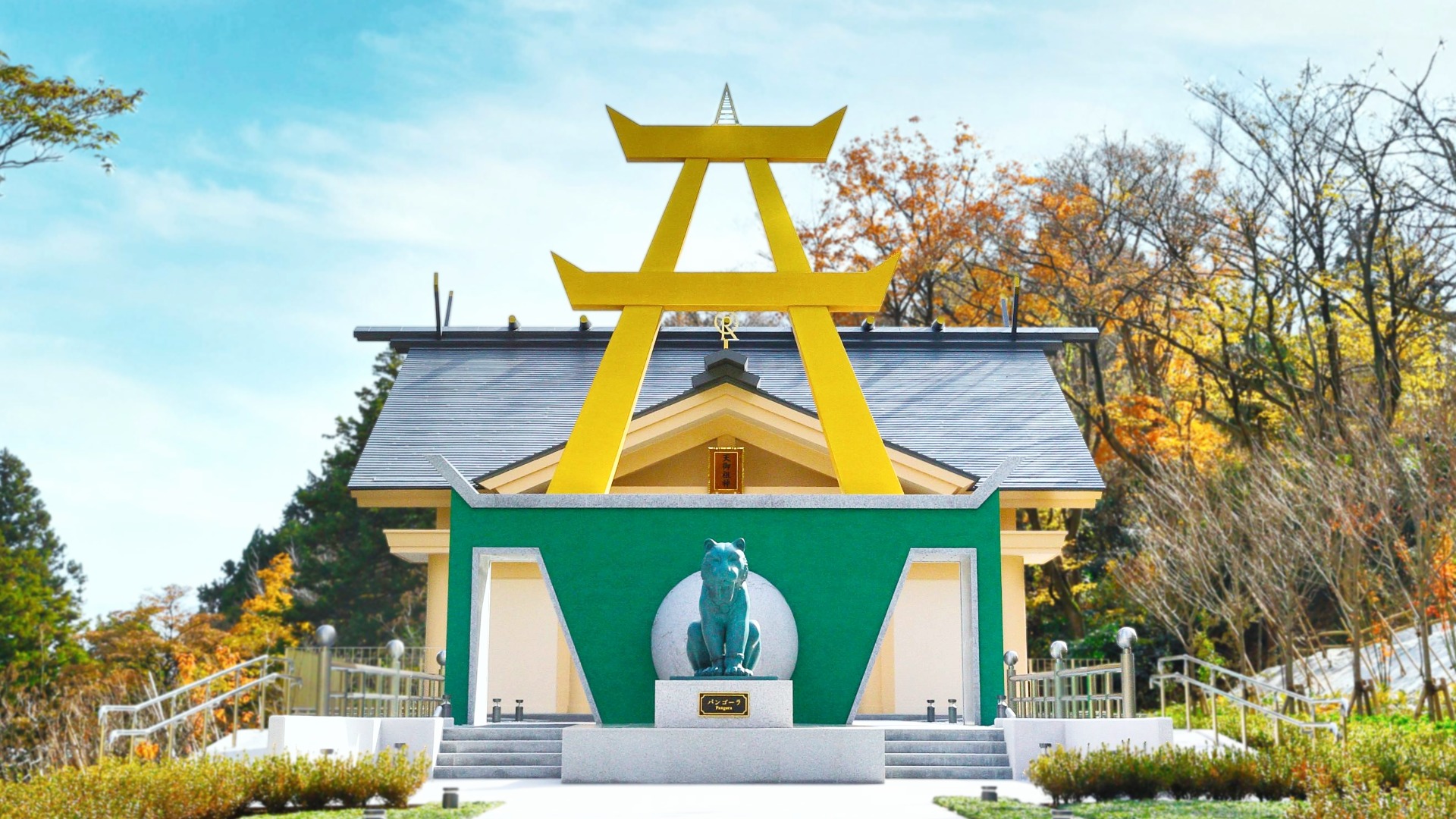
Please offer gratitude to the Saber-Toothed Tiger that protects Ame-no-Mioya-Gami and then continue along the path.
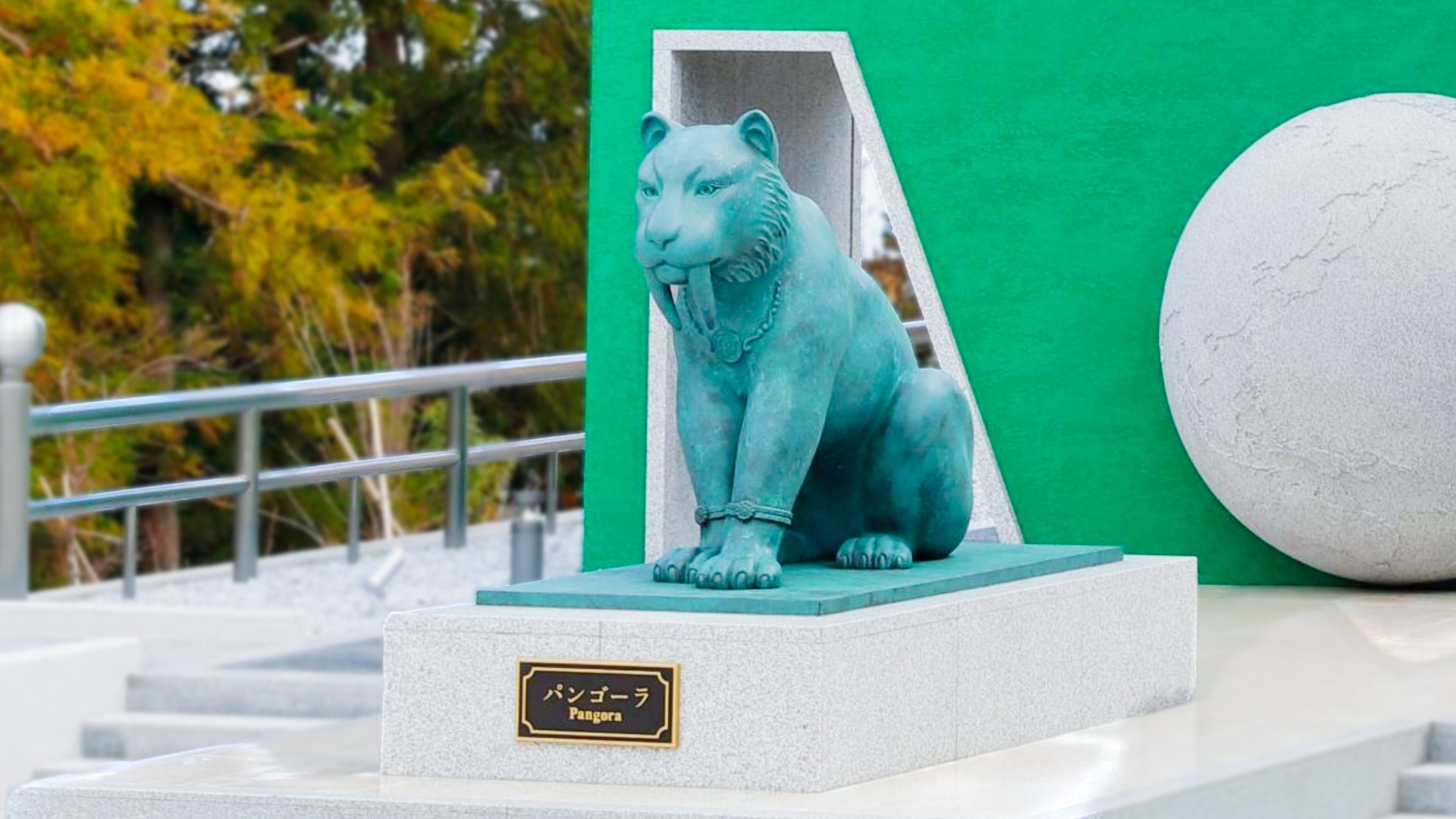
The Statue of the Saber-Toothed Tiger
The statue represents Pangora, the saber-toothed tiger that protected Ame-no-Mioya-Gami about 30,000 years ago.
Pangora lived for 1,000 years and has been resting in Gora with Ame-no-Mioya-Gami and continues to protect the shrine.
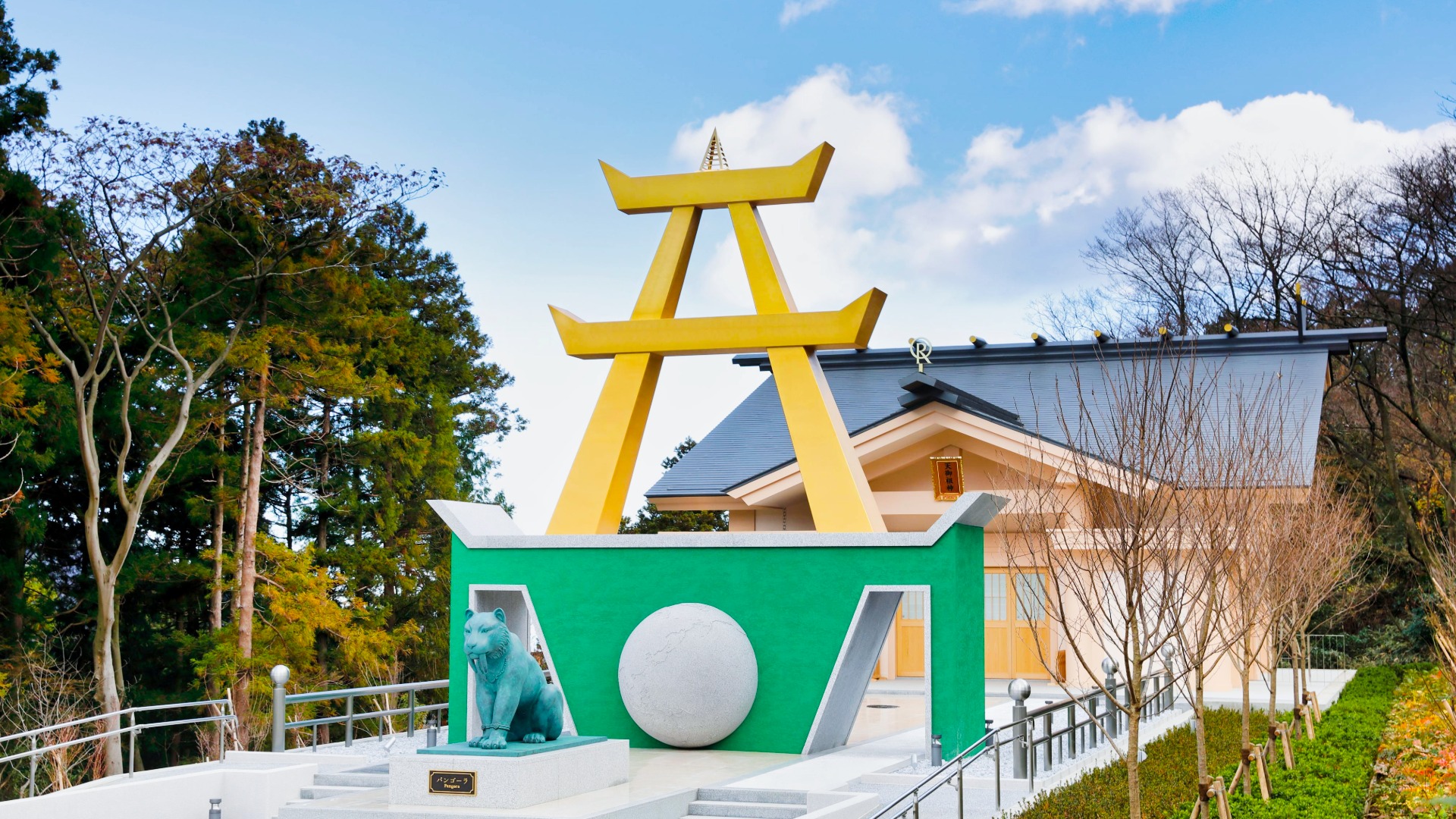
Torii of Ame-no-Mioya-Gami
The torii gate was modeled after the A-shaped torii of Ame-no-Mioya-Gami Shrine on Planet Mother in the Andromeda Galaxy. Adhering to the teachings of Ame-no-Mioya-Gami, men and women walk on separate paths to get to the Main Hall.
The central path is the path for God, while women use the black path on the left and men use the white path on the right.
Foreign evil gods
Can do nothing
Justice is with God
From the song 'The Dream of Ame-no-Mioya-Gami'
Proper Way to Worship
Please worship with proper manners. Put your palms together in prayer and bow. Then, tilt your head down slightly and offer your gratitude and pledge.
From now on
The heart of Yamato
Will spread to the world
It is the heart of peace
That is in Yamato
From the song 'The Dream of Ame-no-Mioya-Gami'
Scriptures
【Books】
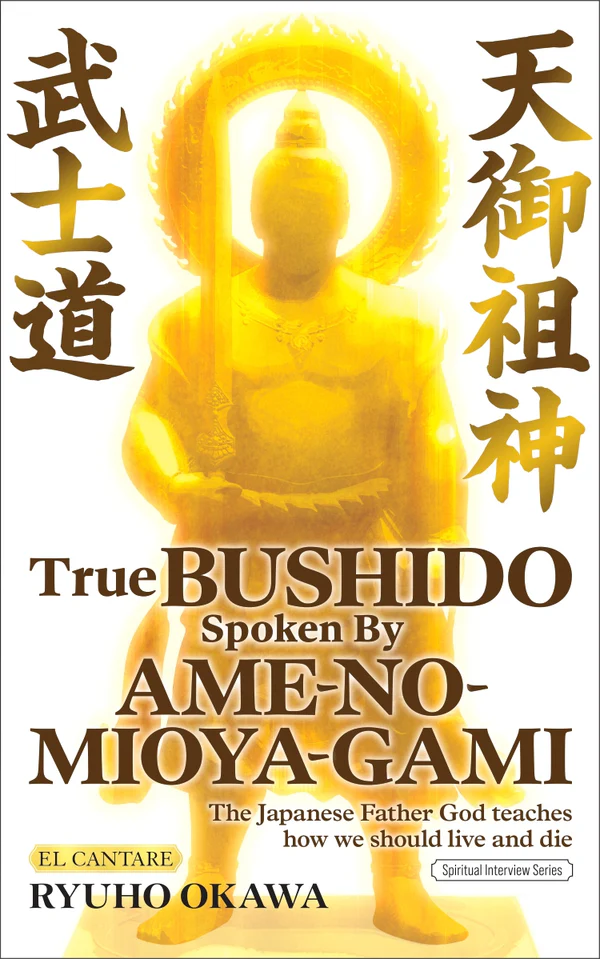
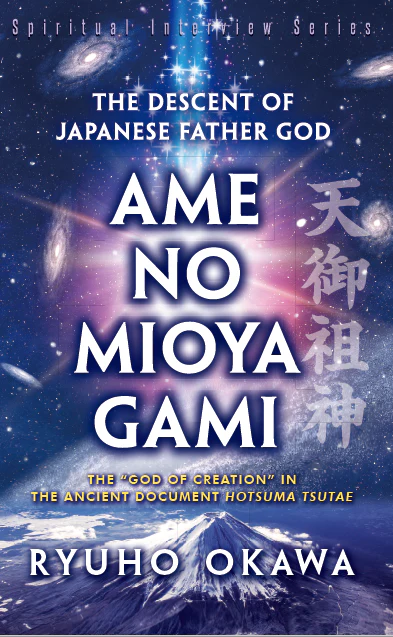
【Songs】
The Shrine of Ame-no-Mioya-Gami Exclusive
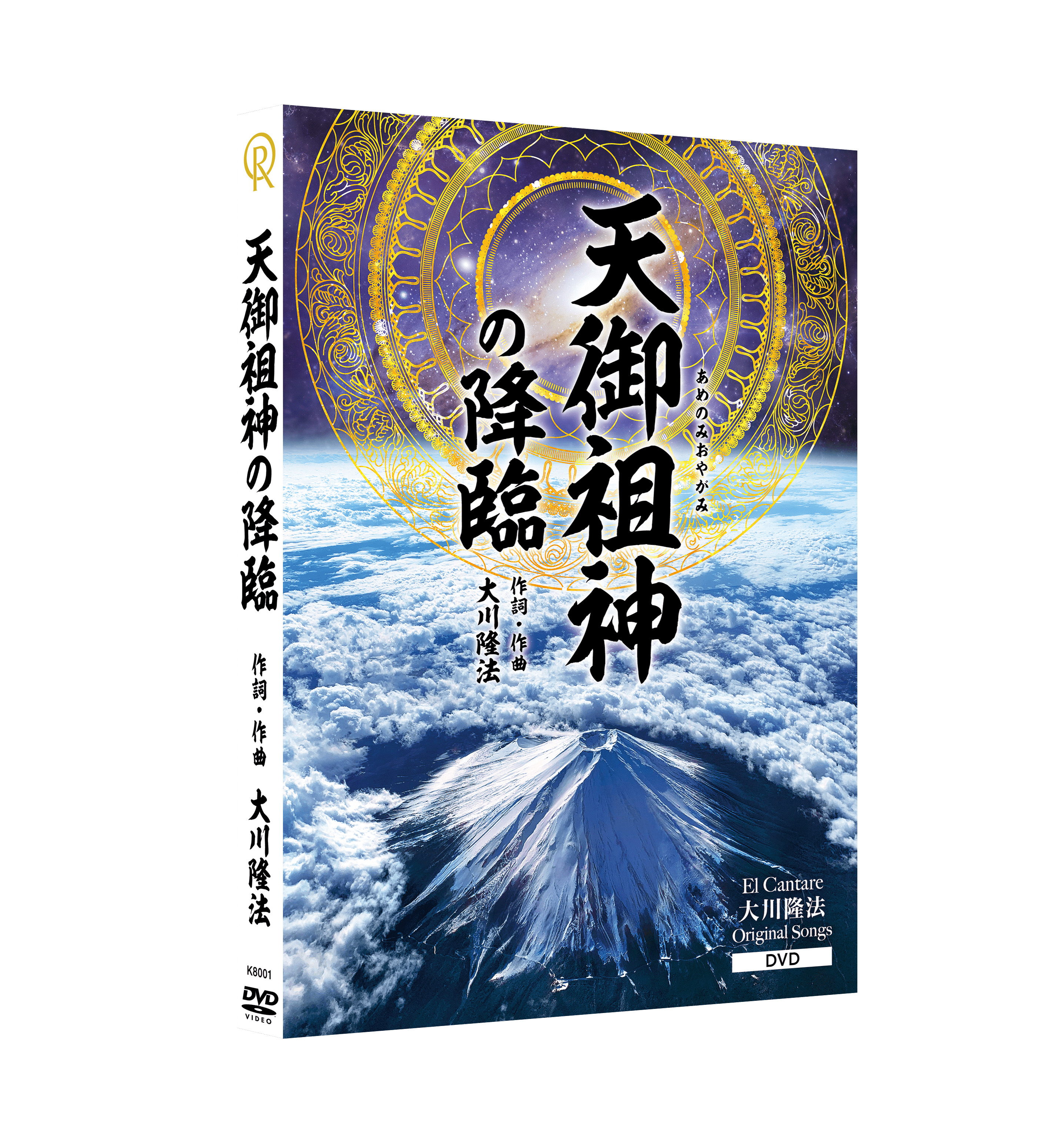
Feel the sacred vibrations of the shrine!
This music video was created based on direct spiritual revelations from Ame-no-Mioya-Gami, the Highest God of Japan.
Through beautiful visuals and music, you can experience the shrine’s sacred vibrations and the magnificent world of Japanese mythology.
You will also discover the origins of Japanese Bushido.
Web Exclusive
Answer a short survey to watch a preview of the music video!
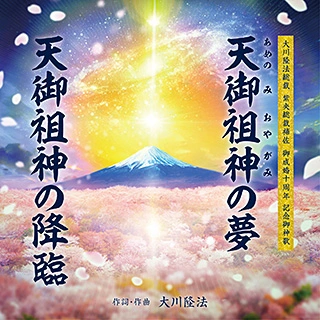
The symbol of the God of Yamato
All good things
Shall gather here
From the song 'The Dream of Ame-no-Mioya-Gami'
What is Happy Science?
Happy Science is a religion founded by Master Ryuho Okawa in 1986. Since its founding, Happy Science has carried out activities to spread happiness based on the true view of life.
Human beings are spiritual beings that have a soul residing in a physical body. The essence of humans is the mind. We reincarnate repeatedly between this world and the other world to develop our souls through different life experiences.
God (Buddha) exists, and He has been guiding humanity through the past, present, and future. The mission and purpose of Happy Science is to spread these spiritual Truths, explore what true happiness is for human beings, and realize God's wish for peace and prosperity in this world. To realize this mission, Happy Science continues to carry out its enlightenment movement through lectures, books, and media; makes various social contributions through its activities; and even engages in political, educational, and international projects.
Even in this modern age, when the spiritual truth has been forgotten and the value of religion has been lost, Happy Science will continue to try to break through the limits of religion.
Nearby Happy Science Temples

Hakone Shoja
159-150 Motohakone, Hakone-machi, Ashigarashimo-gun, Kanagawa, 250-0522, Japan
Click here for more information on Hakone Shoja

Odawara Temple
2-2-55 Minamicho, Odawara, Kanagawa, 250-0013, Japan
Click here for more information on Odawara Temple
Access
1320-1 Gora, Hakone-machi, Ashigarashimo-gun, Kanagawa, 250-0408, Japan
TEL:0460-83-9775 FAX:0460-83-3807
Hours of Operation: 9:00a.m.~5:00p.m.
Closed on Mondays. If a national holiday or a Seventh Day (the 7th, 17th, or 27th of each month) falls on a Monday, the Shrine will be closed the following Tuesday.
Welcome to the Shrine of Ame-no-Mioya-Gami!
To all visitors,
Please read the information below and have a safe visit.
- Eating is prohibited inside the building and on the premises of the Shrine of Ame-no-Mioya-Gami. Please finish your meal before visiting the Shrine (beverages are allowed).
- Since the number of restrooms is limited, please use the facilities at Sounzan Station.
Area Around The Shrine of Ame-no-Mioya-Gami
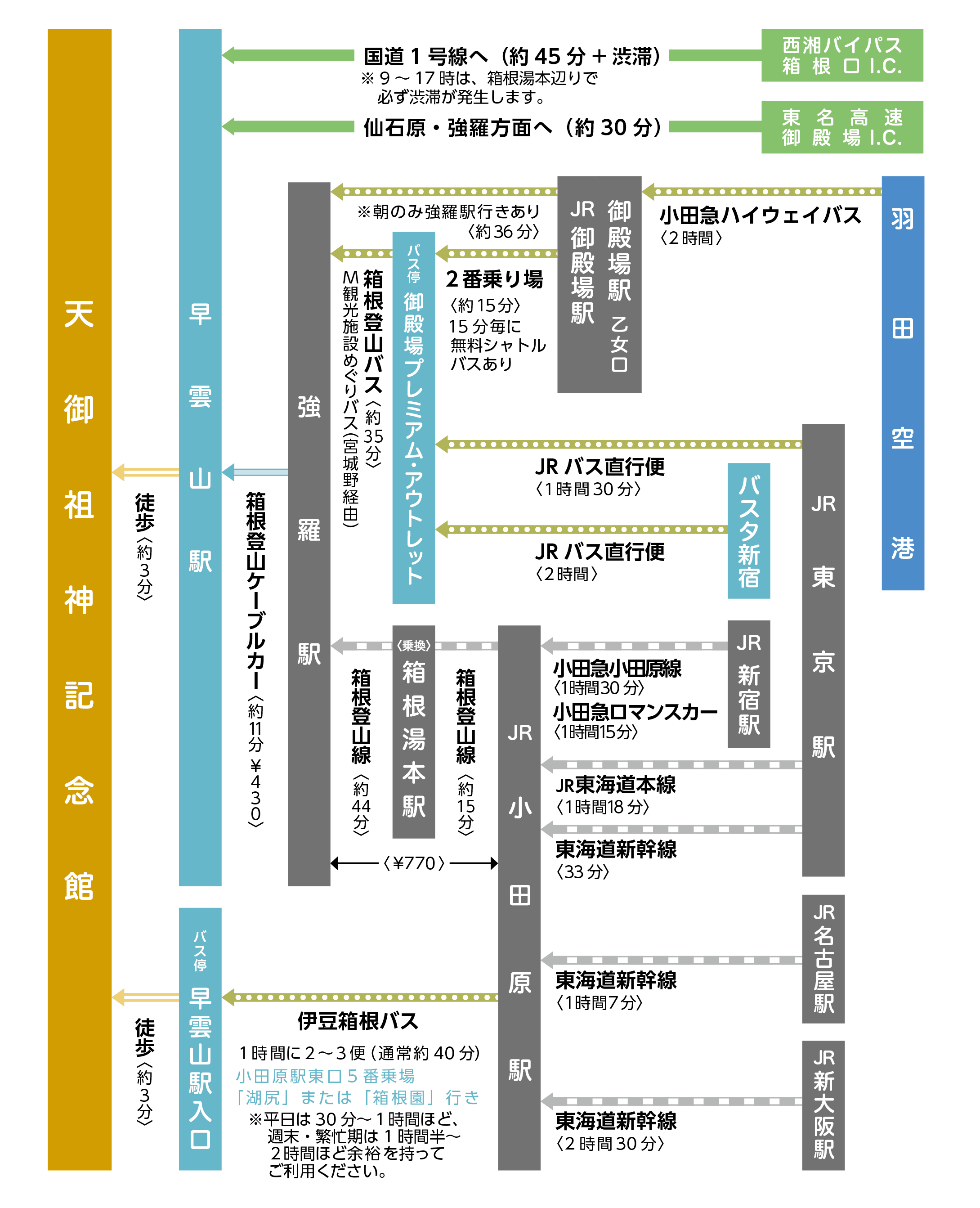
- A 3-minute walk from Sounzan Station. As the path is downhill, visitors are advised to wear slip-resistant footwear during winter.
- Sounzan Station offers restrooms, an accessible restroom, a nursing room, a first-aid room, a souvenir shop, light meals, vending machines, an observation terrace, benches, USB charging spots, a foot bath, coin lockers, and more. Please feel free to use these facilities.
- There are ryokan (traditional Japanese inns) near Sounzan Station and Gora Station, while business hotels are available around Odawara Station and Gotemba Station.
- The roads surrounding Owakudani, a sightseeing spot just beyond Sounzan Station, are often heavily congested on weekends. Taking the ropeway is recommended.
Access by Car
- Approximately a 30-minute drive from Tomei Expressway Gotemba I.C. to Sounzan Station.
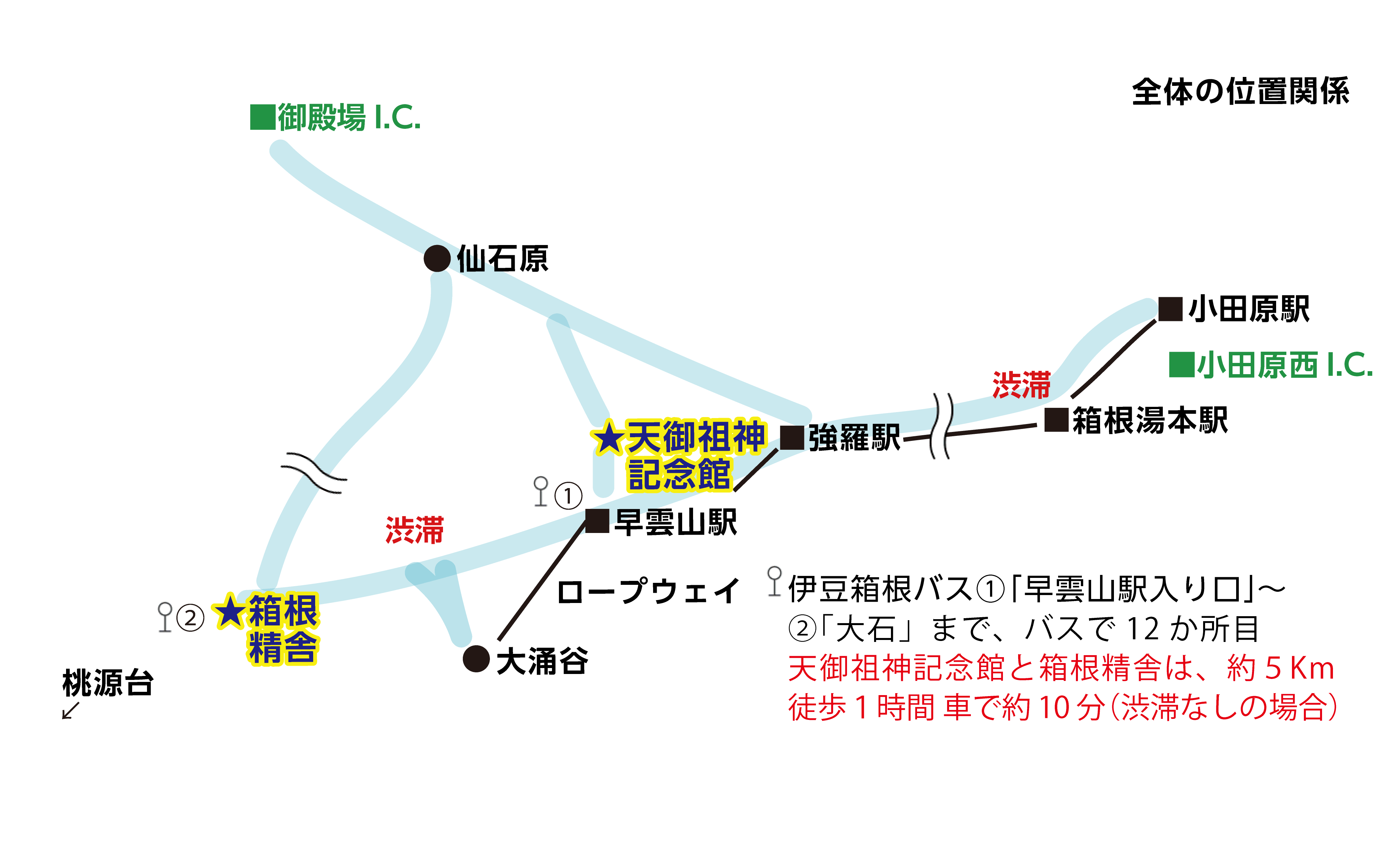
- Traffic congestion often occurs from Odawara Nishi I.C. to Hakone-Yumoto Station. For on-time arrival, it is recommended to take the route via Gotemba → Sengokuhara → Gora.
- On weekends and during busy seasons, please allow yourselves an additional 1.5 hours to reach the Shrine. (For traffic information, please check the 'Hakone Navi' website.)
- The route includes mountain roads, sharp curves, and mountain passes, so please be sure to use winter tires during the winter season.
Parking Lot Information
- Visitor parking is not available at the Shrine of Ame-no-Mioya-Gami.
(Vehicles transporting wheelchair users or people who have difficulty walking may stop temporarily for drop-off and pick-up only. Parking is not permitted.) - Please use the parking lot at Sounzan Station (100 spaces available). Fee: 1,000 yen per use, open until midnight, with no time limit.
- If the parking lot is full, please use the parking lot near Gora Station.
(Information on parking availability near Sounzan Station and Gora Station is available on the 'Times Parking' website.) - Buses, regardless of size, are not allowed to stop in front of the Shrine. 4 parking spaces for buses (on a first-come, first-served basis and free of charge) are available at Sounzan Station parking lot.
Access to Hakone Shoja from the Shrine of Ame-no-Mioya-Gami
- It normally takes about 10 minutes by bus from the Sounzan Station bus stop to Oishi, the nearest bus stop to Hakone Shoja. However, during the hours when Owakudani is open (9:00a.m.–4:30p.m.), the trip can take over an hour.
TOP